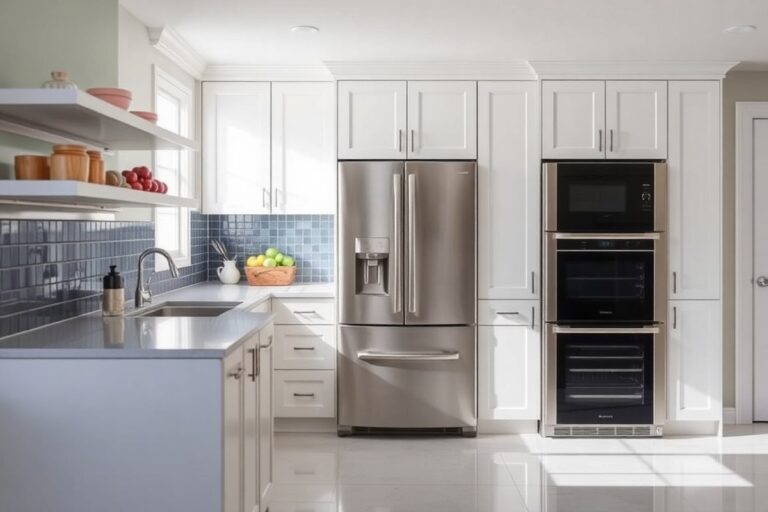
Induction Range vs Electric Range – 7 Key Differences to Know for Smarter Cooking
Induction Range vs Electric Range – 7 Key Differences to Know centers on what makes these cooking options distinct. Induction ranges heat faster, transfer heat more efficiently, and usually cost more upfront than electric ranges. Your choice depends on your cooking speed needs, energy use priorities, and budget constraints.
This overview helps homeowners and renters decide which range fits their kitchen lifestyle best. You’ll learn about efficiency, performance, cookware needs, safety, installation, maintenance, and price differences to support a smart purchase.
Key Takeaways
- Induction ranges cook 20% to 40% faster than electric ranges due to rapid, direct heat transfer.
- Up to 90% of heat generated by induction transfers directly to cookware, compared to about 65-70% for electric coils.
- Induction cooktops generally offer 5-10% greater energy efficiency than conventional electric cooktops.
- Induction ranges typically start around $1,000, often costing more than electric ranges that can start below $800.
- Induction ranges require compatible magnetic cookware, while electric ranges work with most cookware types.
- Electric ranges may be a better budget option for renters or those unwilling to change their cookware.
How Induction Ranges Differ from Electric Ranges
An induction range uses electromagnetic energy to directly heat your cookware, while a conventional electric range relies on electric resistance coils to generate heat. This fundamental difference in technology affects how quickly and efficiently each range heats your food. An induction cooktop contains copper coils beneath a smooth glass surface. When powered on, these coils create a magnetic field that induces heat directly inside pots and pans made of magnetic materials such as cast iron or some stainless steel. Heat is generated only in the cookware, which means the cooktop itself stays relatively cool.
In contrast, a standard electric range heats by passing electricity through metal coils, either exposed or beneath a ceramic surface. These coils generate heat through resistance, and the heat then transfers to the cookware resting on them. This process means the cooktop surface gets hot, and the heat energy transfers from the coil to the pan, losing some efficiency in the process.
The oven in both induction and electric ranges works the same way, using electric resistance coils to produce heat. Therefore, the notable efficiency and speed benefits of induction apply only to the cooktop, not the oven portion of the range.
Most induction and electric ranges require a 240-volt power supply, often drawing about 40 to 50 amps depending on the model. This largely means that if you are upgrading from a standard electric range to induction, you typically won’t need an electrical panel upgrade. However, installation complexity can be slightly higher with induction models due to precise wiring needs and ensuring the correct power delivery for the induction coils. Here is a direct comparison to highlight these technological differences:
| Feature | Induction Range | Electric Coil Range |
|---|---|---|
| How Heat Is Generated | Electromagnetic field heats cookware directly | Electric resistance coils heat cooktop surface |
| Heat Transfer Efficiency | 85, 90% transferred to cookware | 65, 70% transferred to cookware |
| Cooktop Surface Temperature | Relatively cool, heats only pot bottom | Hot surface, heat transferred indirectly |
| Cookware Compatibility | Magnetic materials only | Any flat-bottomed cookware |
| Typical Installation Complexity | Moderate to high (depends on power needs) | Low (standard 30A circuit often sufficient) |
| Price Range | Typically $1,000 to $5,000 | Generally $700 to $2,700 |
Knowing how these ranges generate heat matters when considering efficiency, safety, and the type of cookware you own. Induction cooktops lead to faster heating with less wasted energy, making them more efficient and cooler to the touch. Electric coil ranges, while less efficient, accommodate any cookware and usually cost less upfront, which may suit budget-conscious buyers or renters better.
Heating Speed and Cooking Performance Compared
Induction ranges heat cookware significantly faster than traditional electric ranges because they use electromagnetic energy to directly warm the pan. This direct heat transfer means induction can boil water about twice as fast as electric resistance cooktops. The higher efficiency, about 85% to 90% of the heat produced goes straight into the pan, compared to roughly 74% for electric ranges, also reduces cooking times overall. Electric ranges rely on heat generated by coils or radiant elements beneath the glass surface, which then transfers to the cookware, creating a slower and less precise heating process.
The difference in heat distribution between these ranges also influences cooking performance. Induction cooking delivers rapid and precise temperature control since the heat increases or decreases almost instantly with changes to the power level. Electric ranges, especially those with coil or radiant elements, react more slowly, causing a lag in temperature adjustments. This slower response can lead to uneven heat, requiring more frequent monitoring and adjustment to avoid burning or undercooking.
Cooking times vary noticeably depending on the range you use. For example, boiling 1 liter of water on a typical electric coil element may take around 10 minutes, while an induction burner can achieve the same result in about 5 minutes. This speed advantage also applies to simmering and frying, giving you finer control to keep delicate sauces from scorching and enabling quicker searing of meats. However, when using induction, it’s important to have compatible cookware made from ferromagnetic materials such as cast iron or stainless steel to benefit from the fast heating. Here is a simple timing comparison for boiling 1 liter of water:
| Heat Source | Approximate Time to Boil |
|---|---|
| Electric Coil | 10 minutes |
| Electric Radiant | 8, 9 minutes |
| Induction | 4, 5 minutes |
To maximize cooking speed on an induction range, use flat-bottomed cookware that sits evenly on the burner and preheat the pan only if the recipe calls for it. On electric ranges, allow extra time for the heating elements to reach the target temperature and decline response. Stirring food more often can help compensate for slower heat adjustment on electric cooktops and prevent hot spots.
Tip: Don’t rely on visual cues alone when switching to induction, use a timer and a thermometer to get used to the faster heating and precise control.
Energy Efficiency and Operating Costs Explained
Induction ranges convert about 85 to 90 percent of their energy directly into the cookware, making them significantly more efficient than traditional electric ranges. Standard electric cooktops typically transfer only 55 to 70 percent of their energy to the pan, with some variation depending on the element size and cookware contact. The US Department of Energy reports these efficiency differences clearly, showing induction’s advantage in reducing wasted energy during cooking.
This higher energy transfer efficiency means induction ranges require less electricity to achieve the same cooking temperature compared to electric ranges. For an average cooking task, this can lead to noticeable savings on your electricity bill over time. The more energy saved in direct heat transfer, the less energy wasted heating surrounding air or the cooktop surface. This also reduces heat buildup in your kitchen, indirectly lowering cooling costs if you run air conditioning in warm months.
Operating costs depend on your cooking habits and local electricity rates, but to offer an example: If an electric range transfers about 60 percent of its energy to the pan and an induction range transfers 90 percent, induction uses around one-third less energy for the same task. With energy costs averaging around $0.15 per kWh in the US, regular daily cooking could save $20 to $40 annually. Over a decade, these savings add up, potentially offsetting parts of the higher initial price of induction ranges.
Long-term cost analysis shows that while induction ranges often cost $200 to $500 more upfront than comparable electric ranges, the energy savings accumulate steadily. For example, saving 30 percent on cooking energy for someone cooking an hour daily with 1.5 kW power use could mean about 165 kWh saved yearly. At $0.15 per kWh, that equates to nearly $25 saved per year. Over 10 years, that’s $250, which narrows the price gap.
Energy efficiency matters beyond cost. Induction’s precise heat control reduces overcooking and wasted energy, which benefits the environment by limiting electricity demand and associated emissions. You should consider how much you cook and choose cookware optimized for induction to maximize these advantages.
Electric ranges still perform well compared to gas and tend to have a lower upfront cost. Efficiency improves when the pot size closely matches the electric burner. In some cases, large pots on electric elements can approach induction’s efficiency levels. Still, induction’s direct heating system makes it the better choice if reducing your electric bill and environmental footprint are priorities.
Understanding Cookware Compatibility and Options
Induction ranges require cookware with magnetic properties to work properly, unlike electric ranges that accept any type. You can test your pots with a magnet to see if they are induction-compatible. For cookware that doesn’t work on induction, adapters offer an affordable solution to bridge the gap.
Best Cookware Materials for Induction
Cookware suitable for induction cooking must have a magnetic base. Common materials that work well include cast iron, carbon steel, and most stainless steel. These materials allow the induction range to generate heat directly in the pan, resulting in efficient and responsive cooking.
Using cookware made of these materials also helps you avoid hotspots and uneven heating. Many pots and pans already in your kitchen might be induction-ready, especially if they passed the magnet test by attracting a magnet firmly to their bottom.
- Cast iron pots and skillets
- Carbon steel pans
- Stainless steel cookware with a magnetic base (mostly 18/0 stainless steel)
- Enameled steel cookware
- Multilayer cookware with a magnetic stainless steel bottom
Always check if the base is flat and smooth to ensure good contact with the induction cooktop for even heat distribution.
Non-Compatible Cookware Types
Cookware made from non-magnetic materials will not work on induction ranges. These include aluminum, copper, glass, and some stainless steels like 18/8 or 18/10 grades. These materials don’t induce the electromagnetic field necessary for induction cooking.
Using non-compatible cookware on an induction cooktop results in no heating or very inefficient heating, leading to frustration and slowed cooking times. It’s easy to identify incompatible pots by sticking a magnet to the base, if it doesn’t stick well, it won’t heat on induction. Here are common non-compatible cookware types:
- Pure aluminum or aluminum cookware without magnetic base
- Copper pots and pans
- Glass or ceramic cookware
- Stainless steel with 18/8 or 18/10 composition (non-magnetic)
Electric ranges don’t have these restrictions and allow cooking with all these materials.
Using Induction Adapter Plates
Adapter plates offer a practical workaround if you want to use existing non-magnetic cookware on an induction range. These thin discs sit between the cookware and the cooktop and contain a magnetic material that heats up and transfers heat to your pan.
Adapter plates typically cost less than $20 and can be found online or at kitchen specialty stores. They require you to place the adapter on the induction zone, then place your non-compatible pan on top. Although they enable use of almost any cookware, they add an extra step and can reduce heating efficiency slightly, resulting in longer cook times. For the best results:
- Choose a high-quality heavy adapter plate to maintain heat transfer
- Keep the plate clean to ensure steady contact
- Use them for pans with flat bottoms only, as warped pans reduce effectiveness
Adapters are not recommended for everyday use but serve well for occasional needs or specialty cookware preservation.
Safety Features and Kitchen Environment Impact
Induction ranges are generally safer than traditional electric ranges due to their design and operation. Induction cooktops heat the cookware directly through magnetic fields, so the surface around the pot remains cool to the touch. This reduces the risk of burns and accidental fires in the kitchen. Electric ranges, however, heat their coils or glass-ceramic surfaces, which can stay hot for a longer time, posing a burn risk if touched accidentally.
Induction’s method of heating also means it transfers about 90% of its heat directly to the pans, keeping the kitchen cooler. This benefit not only improve comfort but also reduces strain on your air conditioning system, especially in warmer months. Electric ranges radiate more ambient heat, causing the kitchen temperature to rise more noticeably during cooking.
Both induction and electric ranges come with safety features, but they differ. Electric models like FOTILE’s 30” electric range often include residual heat indicators that alert you when the surface is still hot, which improves safety after cooking. Induction cooktops may lack these indicators since the surface barely heats up, but many include automatic shut-off and child lock features to prevent accidental activation.
- Induction surfaces stay cooler, minimizing burn risks.
- Electric ranges use residual heat indicators as safety alerts.
- Induction models often include child locks and automatic shut-off.
- Electric coils or glass tops remain hot longer, requiring caution.
- Induction reduces kitchen heat, lowering cooling costs in summer.
- Both ranges benefit from using cookware with flat, smooth bottoms for stability.
- Use a timer or alert system to avoid leaving cooking unattended.
Safe use involves being mindful of the cooktop type and its risks. For induction, always ensure your pans are compatible and centered on the burner to activate the heating correctly. Avoid spilling liquids that could create electrical hazards or activate sensor shut-offs. For electric ranges, wait for the residual heat indicator to show cooling is complete before touching or cleaning the surface. Physically marking hot zones can help prevent accidents.
Never rely solely on residual heat indicators; always double-check surface temperature before cleaning or placing objects on the cooktop.
Installation Requirements and Maintenance Needs
Induction ranges typically need a more powerful electrical setup than older electric ranges, often requiring a 240-volt, 40- to 50-amp dedicated circuit. Installation can be more involved if your home’s electrical system isn’t already prepared for the higher amp draw. Maintenance for both induction and electric ranges focuses on keeping surfaces clean and ensuring electrical components are functioning, but induction models might be easier to maintain due to their smooth ceramic tops and fewer heating elements.
Electrical Requirements and Upgrades
Most induction ranges require a 240-volt, 40- to 50-amp circuit, compared to older electric ranges that often operate on a 30-amp circuit. Both types need a dedicated circuit, meaning no other appliance shares the same breaker. The plug style, usually NEMA 14-50, is similar for both, making outlet compatibility less of an issue.
Homes built before 2000 frequently need electrical panel upgrades or circuit modifications to handle induction ranges. This upgrade ensures the wiring and breaker can support the higher amperage safely. Consult a licensed electrician to verify your panel’s capacity and run new dedicated circuits when necessary.
Installation Process Overview
Installing an induction range involves checking your electrical panel’s capacity, installing or confirming the correct dedicated circuit, and ensuring the outlet matches the range’s plug requirements. Typical induction installation steps include:
- Turn off power at the main breaker to avoid shock
- Verify that wiring supports 40-50 amps for induction (30 amps may suffice for some electric ranges)
- Install or upgrade to a NEMA 14-50 outlet if not already present
- Connect the range following manufacturer wiring diagrams
- Test electrical connections and power up the range for proper operation
- Check for proper airflow and ventilation, aiming for under 400 CFM if a range hood is installed
Compared to electric ranges, induction installs may require additional electrical work, such as panel upgrades or replacing circuit breakers. Sometimes a permit is needed for electrical work, so check with your local code office. Professional installation ensures safety and avoids potential code violations or voided warranties.
Routine Maintenance Tips
Both induction and electric ranges benefit from regular cleaning and inspection. Keep ceramic glass surfaces free of spills, crusts, and abrasions using non-abrasive cleaners designed for cooktops. Induction ranges typically have smoother glass tops without exposed coils, making cleaning simpler and reducing debris buildup.
Inspect the power cord and plug occasionally for wear or damage. For electric ranges with coils, check for loose or cracked heating elements. Induction units rely on electronic components beneath the glass, so any irregular heating or error codes should prompt a technician consult. Avoid using harsh chemicals or tools that can scratch glass surfaces to maintain both types in good condition.
Price Differences and Long-Term Value Considerations
Induction ranges generally cost more upfront than traditional electric models. For example, a 30-inch 800-series electric cooktop may run about $1,400, while an equivalent induction cooktop costs around $2,350. This price difference reflects the advanced technology used in induction cooking. Despite the higher initial investment, induction ranges may provide better long-term value due to faster cooking times and greater energy efficiency.
Some local utility companies and governments offer rebates for purchasing energy-efficient appliances, including induction ranges. These rebates vary by location and can reduce the price difference somewhat, making induction more accessible. It’s important to check with local programs before buying to see if you qualify. Rebates might range from $50 to several hundred dollars depending on your region and the model you choose.
| Range Type | Typical Upfront Cost | Rebate Availability | Long-Term Operational Cost |
|---|---|---|---|
| Traditional Electric Range | Approx. $1,400 for 30-inch model | Rare or none | Higher energy use, longer cook times |
| Induction Range | Approx. $2,350 for equivalent 30-inch model | Possibly available via local utility rebates | Lower energy use, faster cooking reduces overall cost |
Choosing between these depends on your budget and cooking needs. When your priority is a lower purchase price and you cook occasionally or simply, a conventional electric range may suffice. To save on energy bills over time, cook faster, and benefit from safety features, spending more upfront on an induction range may offer better returns. Installation costs can also be higher for induction units, so factor those into your budget.
Which Range to Choose: Key Decision Factors
Choosing between an induction and electric range depends mostly on your cooking habits, kitchen layout, and budget. Induction ranges excel in quick heating and precise controls, while electric ranges often come at a lower upfront cost and work well with a wider variety of cookware. Understanding your specific kitchen environment and priorities will guide you to the right choice.
Matching Ranges to Cooking Needs
Consider how you cook daily to determine which range fits you best. Induction ranges heat food faster and offer more precise temperature control, so they’re ideal if you want quick meals or enjoy techniques that need delicate heat adjustments, like simmering or melting chocolate. Electric ranges heat more slowly but maintain a steady heat, making them suitable if you tend to simmer soups or stews over longer periods.
Also, evaluate your cookware. Induction requires magnetic pots and pans, such as cast iron or stainless steel labeled induction compatible. You don’t need to replace your cookware to use electric ranges since they work with all types, including aluminum and glass.
- Induction suits fast cooking and temperature precision.
- Electric handles all cookware without special requirements.
- Induction ranges cool down quickly after use, improving kitchen safety.
- Electric coils and smooth tops provide consistent heat but respond slower.
- Choose induction if you want energy-efficient, modern tech features.
- Pick electric to avoid potential upgrades to your pots and pans.
Ensure your pots and pans have a flat magnetic base to fully benefit from induction technology.
Budget and Installation Considerations
Cost plays a big role in choosing between induction and electric. Induction ranges generally start around $2,000, especially for advanced models, while electric ranges tend to cost between $600 and $1,500. Both types usually need a 240-volt circuit, so check that your home’s electrical panel can handle the required amperage safely.
Consider long-term costs too. Induction ranges might have a higher upfront price but often save on energy bills due to their efficient heating. Electric ranges might cost less initially but could be slightly less energy-efficient over time.
Energy and Safety Priorities
Energy use is similar between the two, with induction slightly edging out electric by transferring heat directly to the pan, reducing wasted energy. This can reduce electricity bills and heat buildup in your kitchen, keeping your space cooler during summer months.
Safety features also influence the decision. Induction ranges remain cool to the touch except where the pan contacts the surface, which lowers burn risks and accidental fires. Electric ranges keep the surface hot for longer after cooking, requiring more caution, especially with kids or pets around.
Step-by-Step Action Plan for Choosing Your New Range
Follow these steps to decide between an induction and electric range that fits your kitchen and cooking style.
- Before you shop: Assess your current cooking habits and cookware to see if you already have compatible pans for induction or if you’ll need new ones. This helps avoid surprises after purchase.
- Week 1: Measure your kitchen space and check your electrical setup for compatibility with induction or electric ranges. A professional electrician can confirm if any upgrades are needed.
- Week 2: Visit stores or check online reviews to compare ranges on heat-up speed, temperature control, and safety features. Note which models meet your cooking needs and budget.
- Week 3: Evaluate your budget against the initial cost and long-term energy efficiencies. Consider financing options and potential savings based on your usage.
- Week 4: Decide on the range type and model based on your research and kitchen setup. Purchase your chosen range and schedule installation with qualified professionals.
- After installation: Test the range with common recipes to get comfortable with heat response and controls. Confirm that safety features work as expected by following the user manual.
- After 1 month: Review your energy bills and cooking experience to assess if the range meets your expectations for efficiency and performance.
Frequently Asked Questions
Are Induction Ranges Compatible with All Types of Cookware?
Induction ranges require magnetic cookware made of materials like cast iron or stainless steel. Non-magnetic pots won’t work efficiently, so check your pans before switching to induction cooking.
Does an Induction Range Reduce Kitchen Heat Compared to Electric?
Yes, induction ranges produce less ambient heat since they heat the pan directly. This makes your kitchen cooler during cooking, which is especially helpful in warm climates or small kitchens.
Can an Induction Range Cause Interference with Electronic Devices?
Induction ranges emit electromagnetic fields that can interfere with some medical devices like pacemakers. Consult your doctor if you have a medical implant before choosing induction cooking.
Is an Induction Cooktop Quieter Than a Traditional Electric One?
Induction cooktops are generally quieter because they don’t use heating elements that hum or buzz. Some noise may come from the fan or cookware vibration, but it’s usually minimal.
Do Electric Ranges Require Special Electrical Upgrades for Installation?
Most electric ranges need a 240-volt outlet, which is common in many homes. If your home’s wiring meets code, you likely won’t need upgrades to install a standard electric or induction range.
How Do Induction Ranges Affect Energy Usage During Simmering?
Induction ranges maintain low, steady heat efficiently during simmering, using less energy than electric coil cooktops. This precise control prevents overheating and reduces wasted electricity.
Before You Go
Choosing between an induction and electric range depends on your cooking style, kitchen setup, and budget. Once you’ve evaluated your needs and options carefully, selecting the right range will be clearer and more rewarding. Start by checking your cookware compatibility today to set yourself up for a smooth purchase and installation.